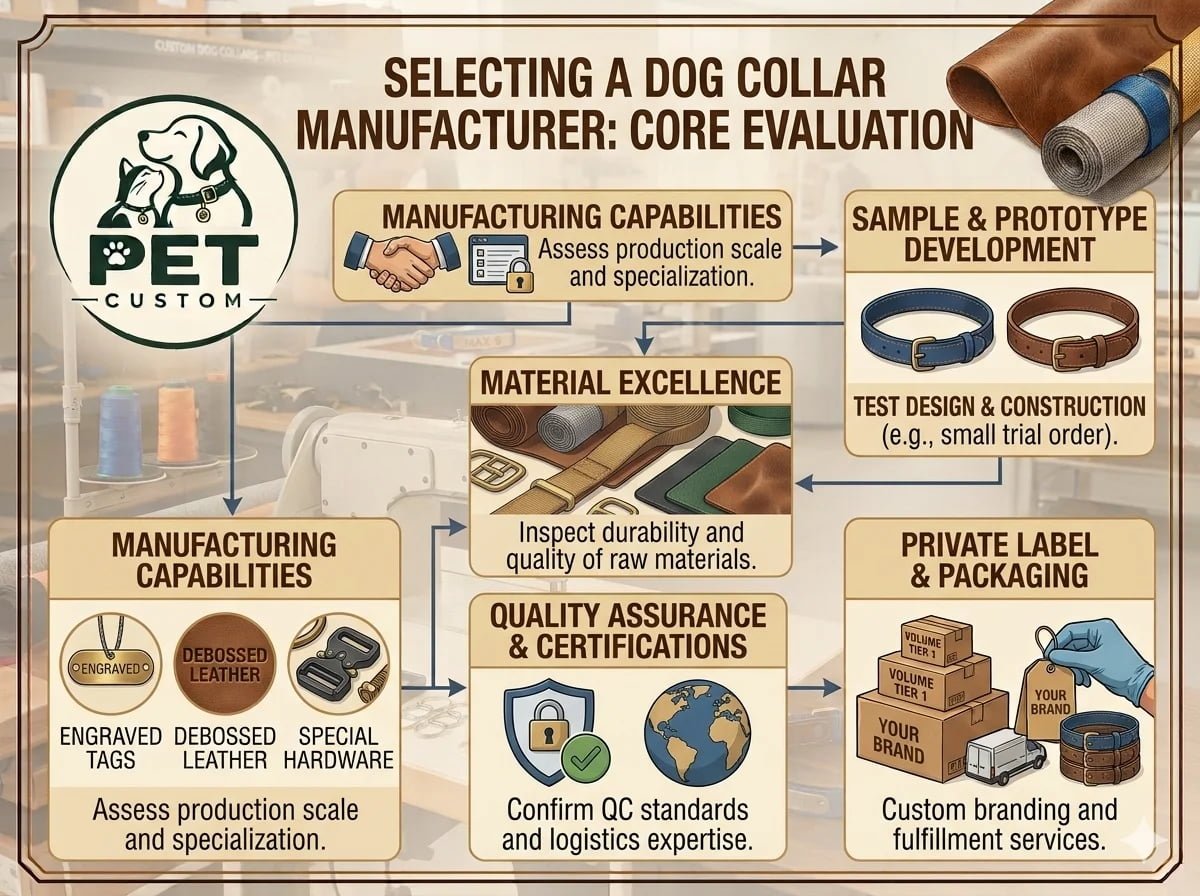
Finding a reliable dog collar manufacturer is an important step for any business developing its own pet product line.
A supplier may look attractive because of a low price or a large product catalog, but these factors alone do not tell you whether the manufacturer is suitable for your brand.
A professional manufacturing partner should be able to consistently produce the required quality while supporting customization, sampling, production, packaging, and future product development.
Manufacturer vs. Trading Company: What’s the Difference?
This is one of the first questions buyers should ask.
A manufacturer produces products directly, while a trading company may source products from different factories.
Neither business model is automatically better.
However, if you need deep customization, direct communication with the production team can be valuable.
Ask potential suppliers:
- Do you manufacture the collars directly?
- Which production processes are handled in-house?
- Do you outsource any components?
- Can you provide factory or production information?
- Can you develop custom products?
The answers can help you understand the supplier’s actual capabilities.
What Should You Look for in a Dog Collar Manufacturer?
Product Experience
Look for manufacturers that understand dog collar construction rather than general textile production.
They should understand materials, stitching, hardware, sizing, adjustment systems, and product durability.
Customization
If you are building your own brand, confirm whether the supplier can customize:
- Materials
- Colors
- Sizes
- Hardware
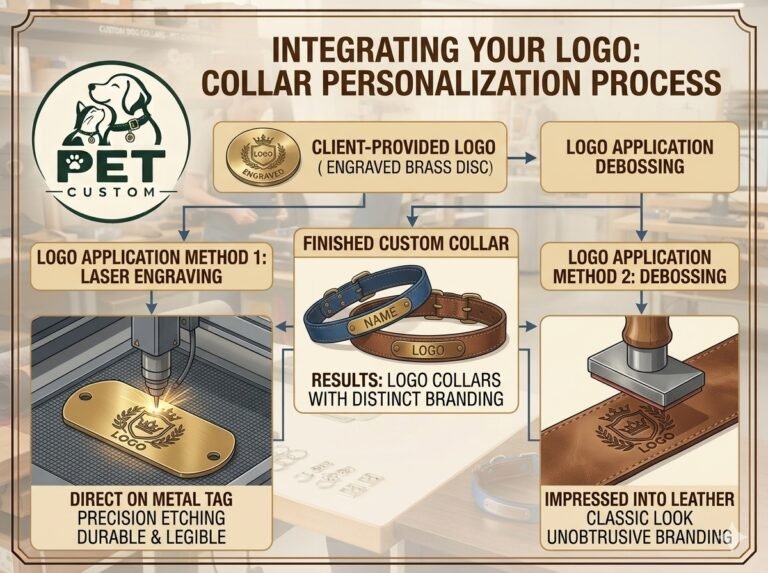
- Logos
- Labels
- Packaging
Sampling
A manufacturer should have a clear sample development process.
You need to know how designs are reviewed, how revisions are handled, and when the final sample becomes the production reference.
Quality Control
Ask how quality is checked during production.
Quality control may include inspection of dimensions, stitching, hardware, logos, colors, and packaging.
How Do You Test a Manufacturer?
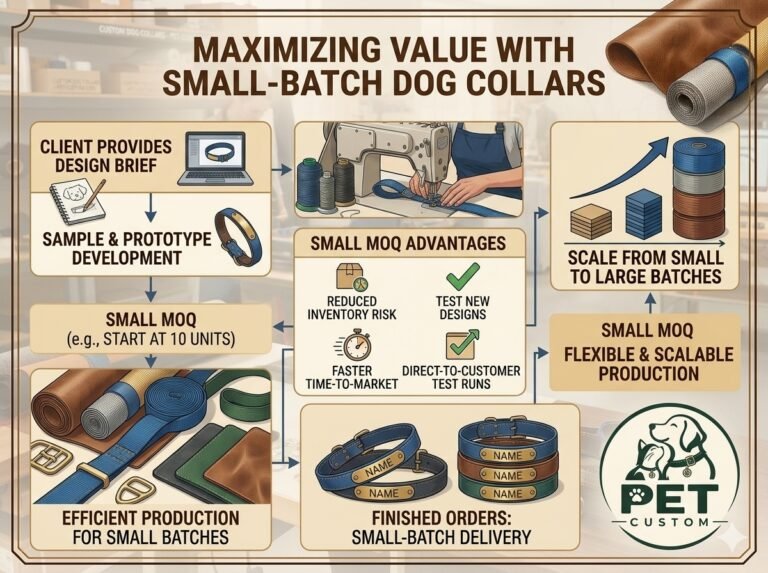
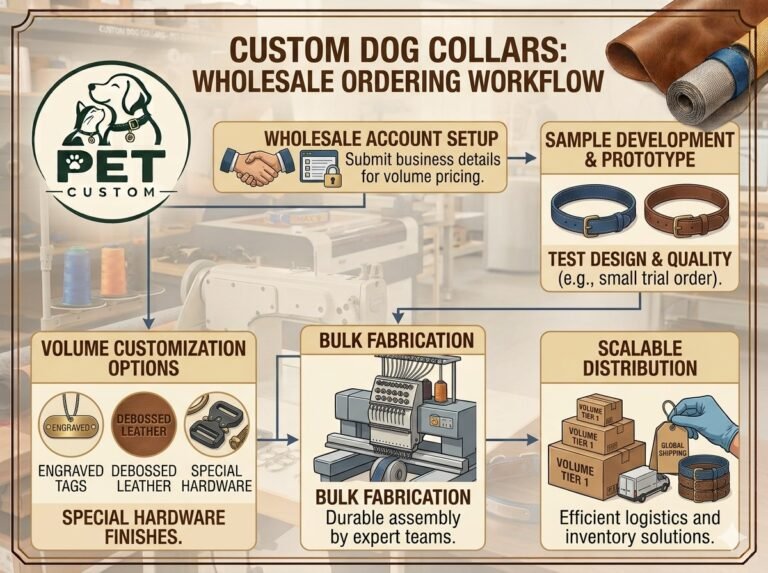
The best method is to start with a sample.
Do not immediately place a large order with an unfamiliar supplier.
Instead:
Step 1: Send your requirements.
Step 2: Review the quotation.
Step 3: Request a sample.
Step 4: Inspect the product.
Step 5: Request revisions.
Step 6: Approve the final sample.
Step 7: Begin bulk production.
This reduces the risk of discovering major product problems after mass production.
What Information Should You Send to a Manufacturer?
A clear product brief can significantly improve communication.
Include:
- Product photos or drawings
- Material
- Dimensions
- Size range
- Color
- Logo file
- Logo position
- Hardware
- Quantity
- Packaging
- Target market
- Special requirements
If some specifications are not finalized, tell the manufacturer.
An experienced supplier may be able to recommend suitable options.
How Important Is Communication?
Very important.
Manufacturing involves many details that can easily be misunderstood.
For example, “dark green” can mean different colors to different people.
Instead of relying only on descriptions, provide visual references or color codes.
Similarly, do not simply say “large dog collar.” Provide actual dimensions.
Clear communication reduces mistakes during sampling and production.
Should You Choose a Specialized Manufacturer?
For a brand focused on dog collars, working with a supplier experienced in collars and related pet products can provide advantages.
They are more likely to understand common product requirements and manufacturing challenges.
They may also be able to recommend materials, hardware, construction methods, and product improvements based on previous projects.
What About Production Capacity?
Capacity matters when your business grows.
A supplier that can produce a small order may not necessarily be able to handle a much larger order later.
Ask about:
- Production capacity
- Lead times
- Peak-season schedules
- Material availability
- Quality-control procedures
- Repeat-order process
You want a supplier that can support both your initial launch and future growth.
Frequently Asked Questions
How do I find a dog collar manufacturer?
Start by identifying manufacturers with relevant product experience. Compare customization capabilities, MOQ, samples, quality, communication, and production capacity before selecting a supplier.
How can I know whether a supplier is a real manufacturer?
Ask about production processes, factory capabilities, product development, and which parts are manufactured in-house. A sample order can also provide valuable evidence of their capabilities.
Should I order a sample?
Yes. A sample is one of the best ways to evaluate product quality and manufacturing capability before placing a bulk order.
Can a dog collar manufacturer create my own design?
Many manufacturers can support custom product development. The level of customization depends on their equipment, materials, development capabilities, and MOQ.
Should I work with one supplier long term?
If a supplier consistently meets your quality, communication, pricing, and delivery requirements, developing a long-term relationship can simplify future product development and repeat orders.
Final Thoughts
Choosing a dog collar manufacturer should be treated as a product-development decision rather than simply a price comparison.
Look at the supplier’s ability to understand your requirements, develop samples, maintain quality, support customization, and handle future production.
For a growing pet brand, the ideal manufacturer is not necessarily the one offering the lowest initial quotation. It is the manufacturing partner that can help you build a reliable product line over time.