Choosing the right material is one of the most important decisions when developing custom dog collars.
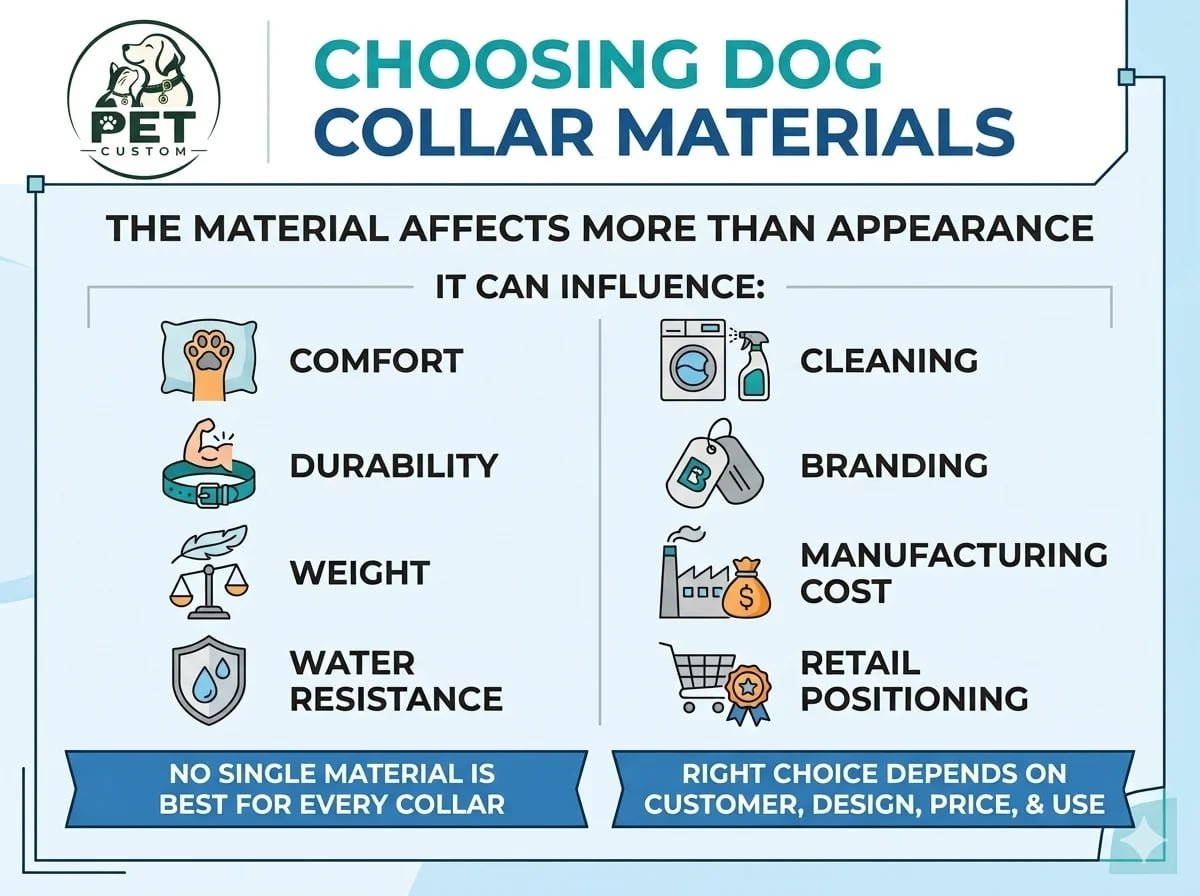
The material affects much more than appearance.
It can influence:
- Comfort
- Durability
- Weight
- Water resistance
- Cleaning
- Branding
- Manufacturing cost
- Retail positioning
There is no single material that is best for every dog collar.
The right choice depends on the product’s target customer, design, price point, and intended use.
Nylon Dog Collars
Nylon is one of the most widely used materials for dog collars.
It offers a combination of durability, flexibility, lightweight construction, and color options.
Nylon can be suitable for:
- Everyday collars
- Outdoor products
- Colorful collections
- Promotional products
- Mid-range pet brands
It is also compatible with several branding methods, making it practical for custom production.
Advantages
- Lightweight
- Durable
- Flexible
- Many color options
- Widely available
- Suitable for various designs
Considerations
Nylon quality varies.
Webbing thickness, weave construction, finishing, and stitching all affect the final product.
For this reason, do not evaluate nylon only by its name. Ask about the actual material specifications.
Polyester Dog Collars
Polyester is another common option.
It can offer good durability and color stability while allowing manufacturers to create different textures and patterns.
Polyester can be suitable for brands that want colorful or printed collar designs.
Advantages
- Good durability
- Good color options
- Suitable for printing
- Flexible design possibilities
- Often suitable for mass production
Considerations
The exact performance depends on the construction and quality of the material.
If you are developing a premium product, request samples and compare different material options rather than choosing based only on price.
Leather Dog Collars
Leather is often associated with premium pet products.
A well-designed leather collar can provide a distinctive appearance and a more traditional or luxury feel.
Leather may be suitable for:
- Premium pet brands
- Luxury collections
- Boutique pet stores
- Lifestyle products
Advantages
- Premium appearance
- Distinctive texture
- Suitable for embossing
- Can develop character over time
Considerations
Leather quality can vary significantly.
Important factors include leather type, thickness, finishing, edge treatment, stitching, and hardware.
Leather products also require different care compared with synthetic materials.
Cotton Dog Collars
Cotton can be attractive for brands focused on softness, natural materials, or lifestyle aesthetics.
It can provide a comfortable feel and can work well with certain fashion-oriented designs.
Advantages
- Soft feel
- Natural appearance
- Suitable for lifestyle products
- Comfortable aesthetic
Considerations
Cotton may not be the ideal choice for every environment.
If the product is designed for frequent exposure to water, dirt, or outdoor conditions, discuss alternative materials with your manufacturer.
Waterproof and Coated Materials
Some pet brands need collars that are easy to clean and resistant to moisture.
Coated materials can be useful in these applications.
They may be suitable for:
- Outdoor dog products
- Active dogs
- Rainy environments
- Easy-clean product lines
The specific performance depends on the material construction and coating.
Ask the manufacturer about cleaning, flexibility, temperature resistance, and long-term durability.
How Do You Choose the Right Material?
Instead of asking:
“Which material is best?”
ask:
“Which material is best for my target customer and product positioning?”
For example:
Premium Brand
Leather or premium synthetic materials may create the desired appearance.
Outdoor Brand
Durable and moisture-resistant materials may be more appropriate.
Fashion Brand
Color, texture, printing, and design flexibility may be more important.
Everyday Pet Product
A durable, lightweight, easy-to-clean material may offer the best balance.
What About Material Thickness?
Thickness matters.
A material that is too thin may not create the desired product structure.
A material that is too thick may feel uncomfortable or make the collar unnecessarily heavy.
The correct thickness depends on:
- Dog size
- Collar width
- Product construction
- Hardware
- Intended use
Ask the manufacturer to recommend material thickness based on your target size range.
Does Material Affect Logo Options?
Yes.
Different materials support different branding methods.
For example:
Nylon / polyester: woven labels, printing, embroidery, patches
Leather: embossing, debossing, metal plates, printing
Specialty materials: branding options depend on the surface and manufacturing process
Therefore, choose the logo method together with the material rather than treating them as separate decisions.
Does Material Affect Manufacturing Cost?
Yes.
Material cost is one of the important components of the final manufacturing price.
However, a more expensive material is not necessarily a better business choice.
Consider the complete product:
Material + hardware + construction + branding + packaging + target retail price
The material should support your overall product positioning.
Should You Send a Material Sample?
If the exact texture, color, or feel is important, providing a physical reference can be very helpful.
You can also ask the manufacturer to provide several material options for comparison.
This allows you to evaluate:
- Texture
- Flexibility
- Thickness
- Color
- Weight
- Finish
A physical sample is often much more reliable than evaluating materials from photographs alone.
Frequently Asked Questions
What is the best material for dog collars?
There is no universal best material. Nylon, polyester, leather, cotton, and coated materials can all be suitable for different product applications.
Is nylon good for custom dog collars?
Yes. Nylon is widely used because it is durable, lightweight, flexible, and available in many colors.
Are leather dog collars better?
Not necessarily. Leather can offer a premium appearance, while nylon or polyester may be more suitable for lightweight, colorful, or outdoor-oriented products.
What is the best material for waterproof dog collars?
Water-resistant or coated materials may be suitable, depending on the product requirements. Discuss the intended use and cleaning requirements with your manufacturer.
Does material affect MOQ?
It can. Special materials may have their own sourcing requirements and minimum purchase quantities.
Final Thoughts
Choosing the best material for custom dog collars requires looking at the entire product rather than one characteristic.
Consider your target customer, product positioning, intended use, design, branding, manufacturing cost, and expected retail price.
If you are unsure which material to choose, ask your manufacturer to provide several options and develop samples for comparison.
The right material is the one that gives your product the appropriate combination of comfort, durability, appearance, manufacturability, and brand value.