If you are planning to launch a new pet product, one of the first questions you may ask a manufacturer is:
“How long does it take to make custom dog collars?”
There is no single production time that applies to every project.
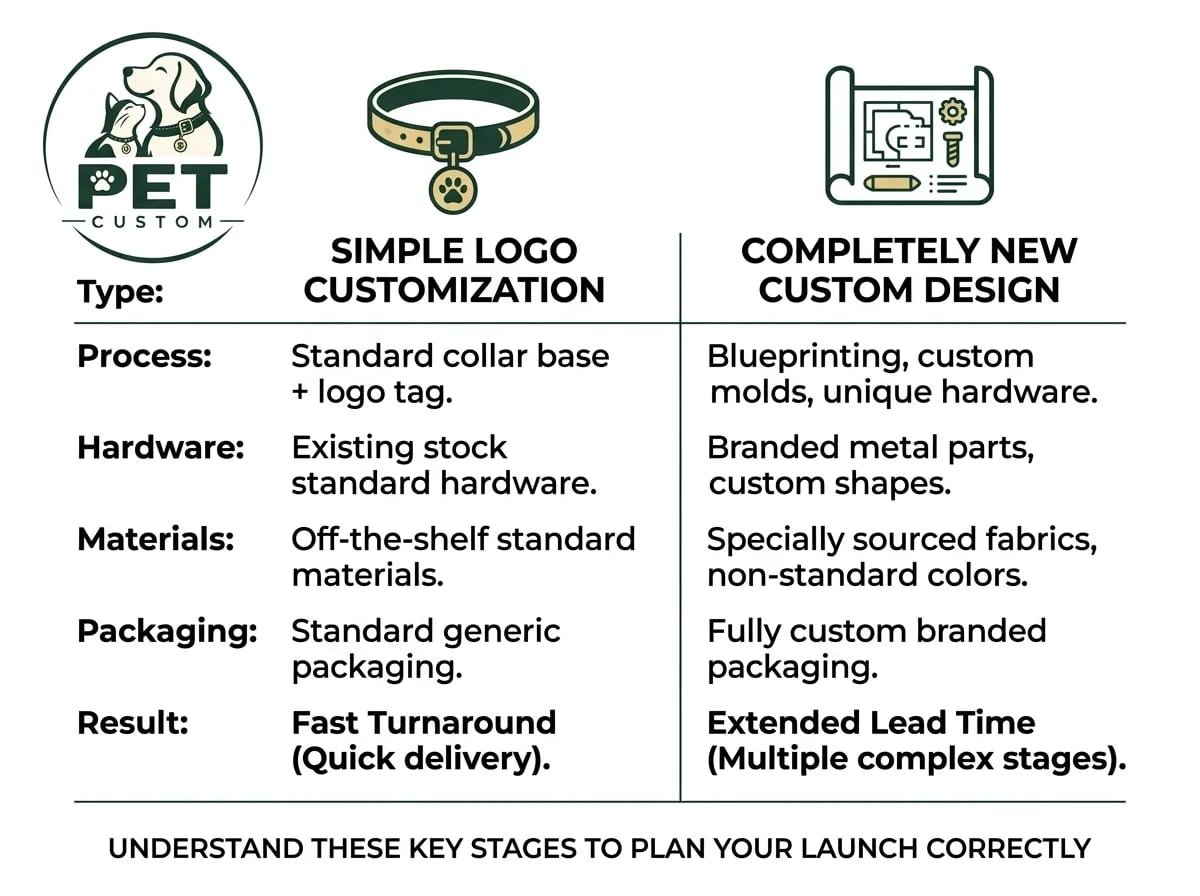
A simple logo-customized collar may move through production much faster than a completely new design with custom hardware, special materials, and branded packaging.
To plan your launch correctly, you need to understand the different stages involved.
What Is the Typical Process?
Custom dog collar production generally includes several stages:
- Product discussion
- Quotation
- Sample development
- Sample revision
- Material confirmation
- Bulk production
- Quality inspection
- Packaging
- Shipping
The total timeline depends on the complexity of each stage.
Stage 1: Product Discussion and Quotation
The first stage is defining the product.
You may need to confirm:
- Material
- Size
- Color
- Hardware
- Logo
- Packaging
- Quantity
If your specifications are complete, the quotation process can usually move faster.
If you are still deciding between several designs and materials, additional communication may be required.
Stage 2: Sample Development
The sample is one of the most important stages.
The manufacturer creates a physical version of the product based on your specifications.
This allows you to evaluate:
- Material
- Size
- Construction
- Hardware
- Logo
- Color
- Appearance
The time required depends heavily on product complexity.
A simple existing design with branding may require less development than a completely new collar.
Stage 3: Sample Revision
The first sample is not always the final sample.
You may decide that:
- The collar is too wide
- The material is too stiff
- The logo is too large
- The buckle needs changing
- The color needs adjustment
- The stitching needs improvement
Each revision can add time.
This is why it is better to allow enough development time rather than planning production around an unrealistically short deadline.
Stage 4: Material Preparation
Once the sample is approved, the manufacturer needs to prepare production materials.
This can include:
- Main collar material
- Webbing
- Hardware
- Labels
- Packaging
- Custom components
Standard materials may be easier to source.
Special materials or custom hardware can require additional lead time.
Stage 5: Bulk Production
Bulk production includes cutting, sewing, assembly, logo application, hardware installation, inspection, and other processes.
Production time depends on:
- Order quantity
- Product complexity
- Number of colors
- Number of sizes
- Custom components
- Factory production schedule
A larger order generally requires more production capacity and planning.
Stage 6: Quality Control
Quality inspection should happen before products are packed and shipped.
Manufacturers may check:
- Dimensions
- Stitching
- Hardware
- Logo
- Color
- Surface defects
- Packaging
If a problem is discovered, corrections may add time to the overall schedule.
Quality control should therefore be considered part of the production timeline rather than an optional final step.
Stage 7: Packaging
If you use standard packaging, this stage may be relatively simple.
Custom packaging can require additional preparation.
For example, custom boxes may need separate artwork approval, printing, finishing, and assembly.
If your packaging is part of the product launch, include it in the production schedule from the beginning.
What Can Make Production Slower?
Several factors can increase lead time.
Custom Hardware
New hardware may require tooling and production development.
Special Materials
Unique fabrics, leather, webbing, or other materials may require additional sourcing time.
Complex Designs
More components and production steps usually require more time.
Multiple Colors
Producing many colors can complicate material preparation and production planning.
Multiple Revisions
Every sample revision can extend the project timeline.
Peak Production Seasons
Factory capacity can vary depending on the time of year and production schedule.
How Can You Reduce Production Time?
The best way is to prepare early.
Before contacting a manufacturer, prepare:
- Product references
- Logo files
- Dimensions
- Color references
- Estimated quantity
- Packaging requirements
You should also make decisions quickly during the sample stage.
Another useful strategy is to use standard hardware and materials for the first production run if your launch schedule is very tight.
Does Shipping Time Count as Production Time?
No.
Manufacturing lead time and shipping time should be considered separately.
For example:
Product development → manufacturing → quality control → packaging → shipping → delivery
A manufacturer may complete production on schedule, but international transportation can still affect the final delivery date.
When planning your launch, always calculate the complete supply-chain timeline.
Frequently Asked Questions
How long does it take to make custom dog collars?
The timeline depends on the product complexity, customization, quantity, materials, and production schedule. A manufacturer can provide a more accurate estimate after reviewing your specifications.
Does a custom sample take longer than a standard sample?
Usually, yes, if the product requires custom materials, hardware, logos, or construction.
Can I speed up production?
Sometimes. Using standard materials and hardware, providing complete specifications, approving samples quickly, and avoiding unnecessary revisions can help.
Does custom packaging increase lead time?
It can. Custom packaging may require separate artwork approval, production, and assembly.
Should I start development before my launch date?
Yes. It is safer to allow time for sampling, revisions, production, quality control, and shipping rather than starting at the last minute.
Final Thoughts
The time required to make custom dog collars depends on the entire product-development process, not just the time spent sewing the final product.
The best way to avoid delays is to prepare your specifications early, communicate clearly with your manufacturer, approve samples promptly, and build enough time into your launch schedule for production and shipping.
If you have a fixed launch date, tell your manufacturer at the beginning of the project. This allows them to evaluate whether your desired product, quantity, and customization requirements can realistically meet the deadline.