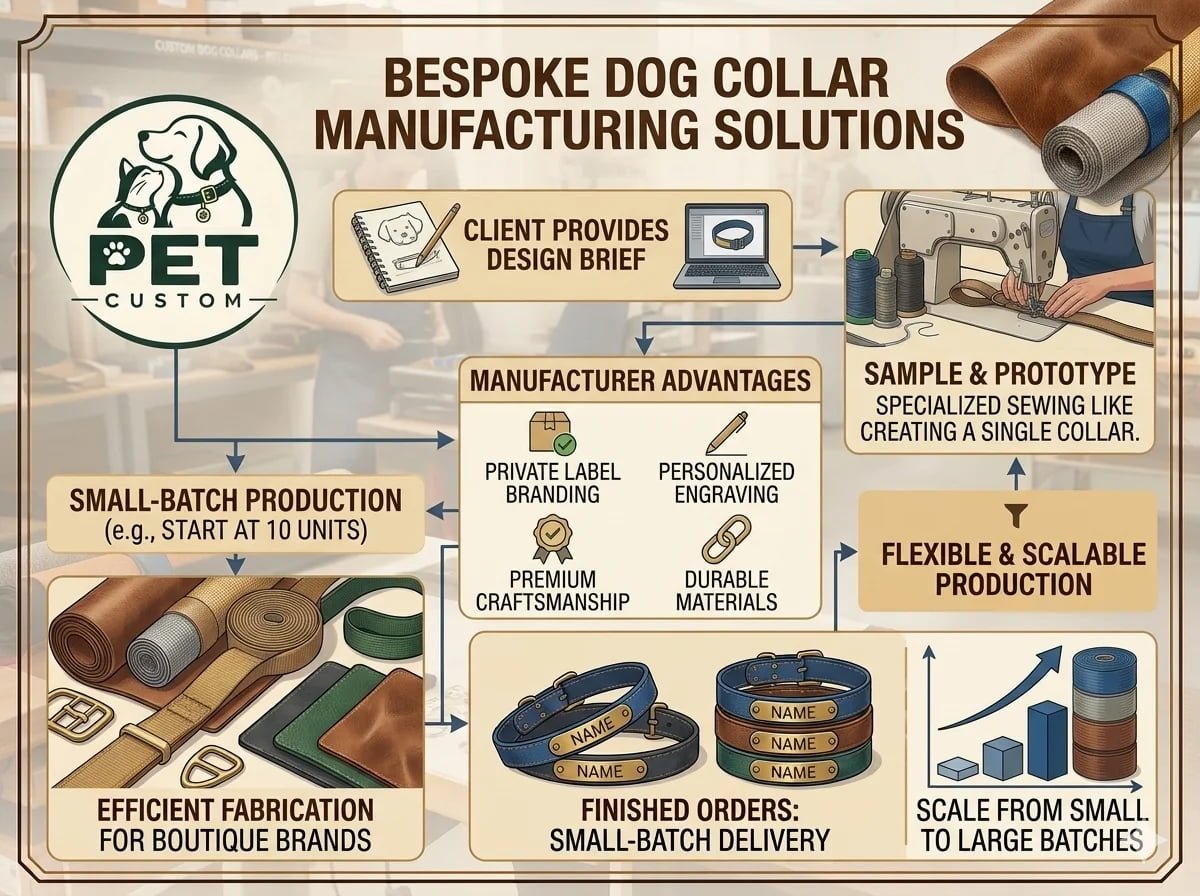
Finding the right custom dog collar manufacturer is one of the most important decisions for a pet brand developing its own product line. A manufacturer does more than produce your collars. The right manufacturing partner can help you develop designs, select materials, improve product quality, manage production, and create products that match your brand.
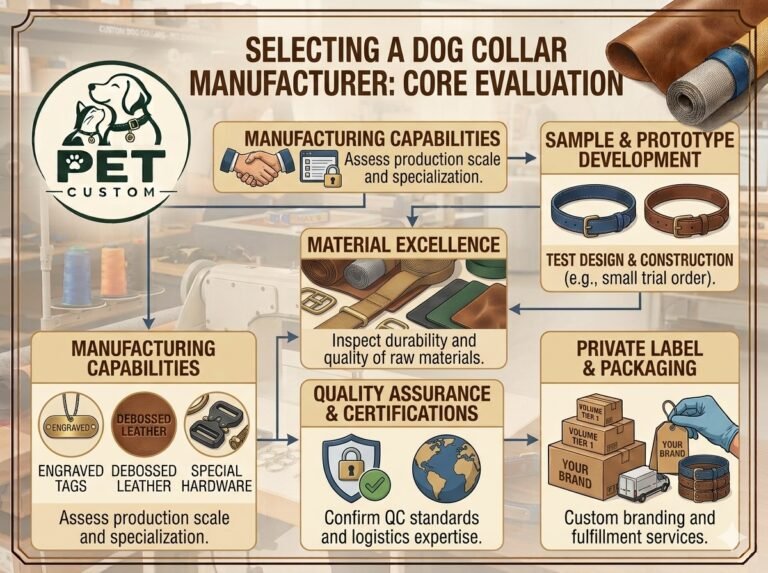
However, not every dog collar supplier has the same capabilities. Before placing a bulk order, pet brands should carefully evaluate customization options, manufacturing quality, MOQ, sampling, communication, and production experience.
Here are the key factors to consider when choosing a custom dog collar manufacturer.
1. Look for Real Customization Capabilities
The first thing to check is whether the manufacturer can actually develop products according to your specifications.
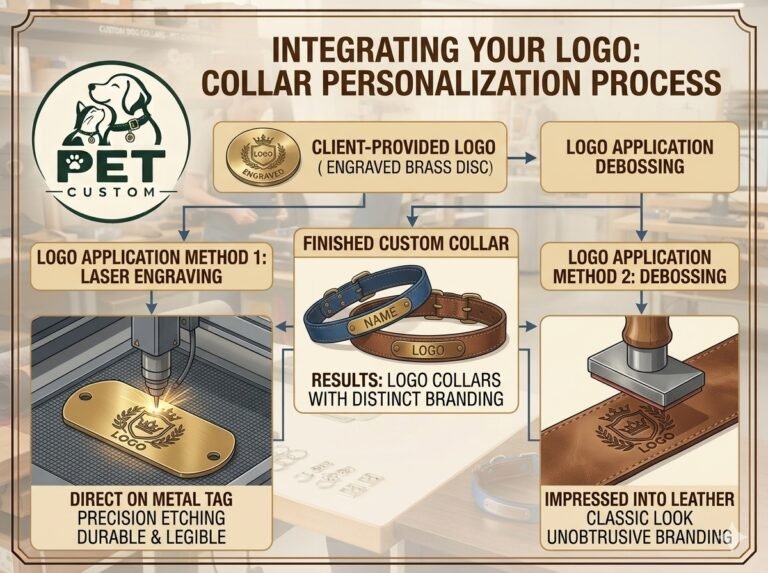
A professional manufacturer should be able to customize materials, colors, sizes, hardware, logos, labels, packaging, and other product details.
For brands with an existing design, the manufacturer should be able to produce the product according to technical specifications or samples. For brands that only have an idea, an experienced manufacturer may also provide product development and design support.
This difference is important because basic suppliers may only offer existing products with simple logo printing, while a true custom dog collar manufacturer can support deeper product customization.
2. Check the Available Materials
Different dog collar materials create different product experiences.
Nylon is popular because it is lightweight, durable, and available in many colors. Leather can provide a premium appearance, while polyester, cotton, and other materials can be used for different product concepts.
When evaluating a manufacturer, ask what materials they can provide and whether they can source materials according to your requirements.
For example, a premium pet brand may need soft-touch materials and high-quality hardware, while an outdoor brand may prioritize durability and water resistance.
Your manufacturer should understand these differences and recommend suitable materials for your product positioning.
3. Evaluate Hardware and Construction Quality
A dog collar consists of more than the main strap.
Buckles, D-rings, adjusters, stitching, labels, and other components all affect the final product.
When reviewing a manufacturer, request product samples and carefully inspect the construction. Look at the stitching, hardware finish, adjustment system, logo placement, and overall craftsmanship.
Consistent construction is especially important for brands ordering products in bulk. A sample may look excellent, but the manufacturer must also be capable of maintaining consistent quality throughout mass production.
4. Ask About MOQ
Minimum order quantity is another important factor.
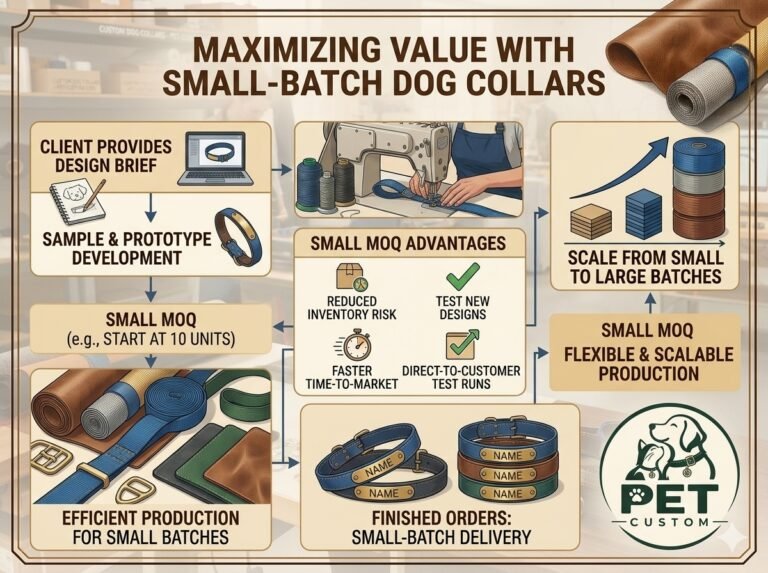
Some manufacturers require large quantities for fully customized products, while others can support smaller production runs.
If you are launching a new pet brand, a lower MOQ can reduce inventory risk and allow you to test your product in the market.
However, larger quantities can often reduce the unit manufacturing cost.
A professional manufacturer should clearly explain how MOQ affects pricing, customization, materials, packaging, and production.
5. Always Request Samples
Before placing a large order, request a sample whenever possible.
A sample allows you to verify the actual product instead of relying only on photos or specifications.
Check the material, dimensions, stitching, buckle, D-ring, logo, colors, packaging, and overall appearance.
If your brand has a specific design, provide detailed specifications and compare the sample with your original concept.
Sample development is also an opportunity to identify problems before mass production.
6. Consider OEM and ODM Capabilities
Pet brands may have different development needs.
OEM manufacturing is suitable when you already have your own design and want a manufacturer to produce it.
ODM can be useful when you have a product concept but need help developing the final product.
If you plan to create a unique collection of custom dog collars, working with a manufacturer that supports both OEM and ODM can provide greater flexibility.
7. Look Beyond the Lowest Price
Choosing a manufacturer based only on price can create problems later.
An extremely low quotation may reflect lower-quality materials, weaker hardware, limited customization, inconsistent production, or inadequate quality control.
Instead of asking only, “How much does this collar cost?”, consider the complete value of the manufacturing relationship.
Important factors include product quality, customization capabilities, communication, lead time, MOQ, packaging, and production consistency.
A slightly higher unit price can be worthwhile if it results in a better product and fewer quality problems.
8. Choose a Manufacturer That Understands Brands
For a growing pet brand, the ideal manufacturing partner should understand that you are not simply buying generic dog collars.
You are building a product.
That means the manufacturer should be able to support your brand requirements, including colors, logos, packaging, labels, product specifications, and future product development.
A long-term manufacturing relationship can make it easier to expand from one collar design into an entire collection of pet products.
Conclusion
Choosing the right custom dog collar manufacturer requires more than comparing prices.
Pet brands should evaluate customization capabilities, materials, hardware, MOQ, samples, OEM/ODM support, quality control, and communication before placing a bulk order.
The right manufacturer can help transform a product idea into a market-ready dog collar while maintaining consistent quality and brand identity.
If you are developing a new pet brand or expanding your existing product line, start with a clear product concept, request samples, and choose a manufacturing partner that can support your brand as it grows.