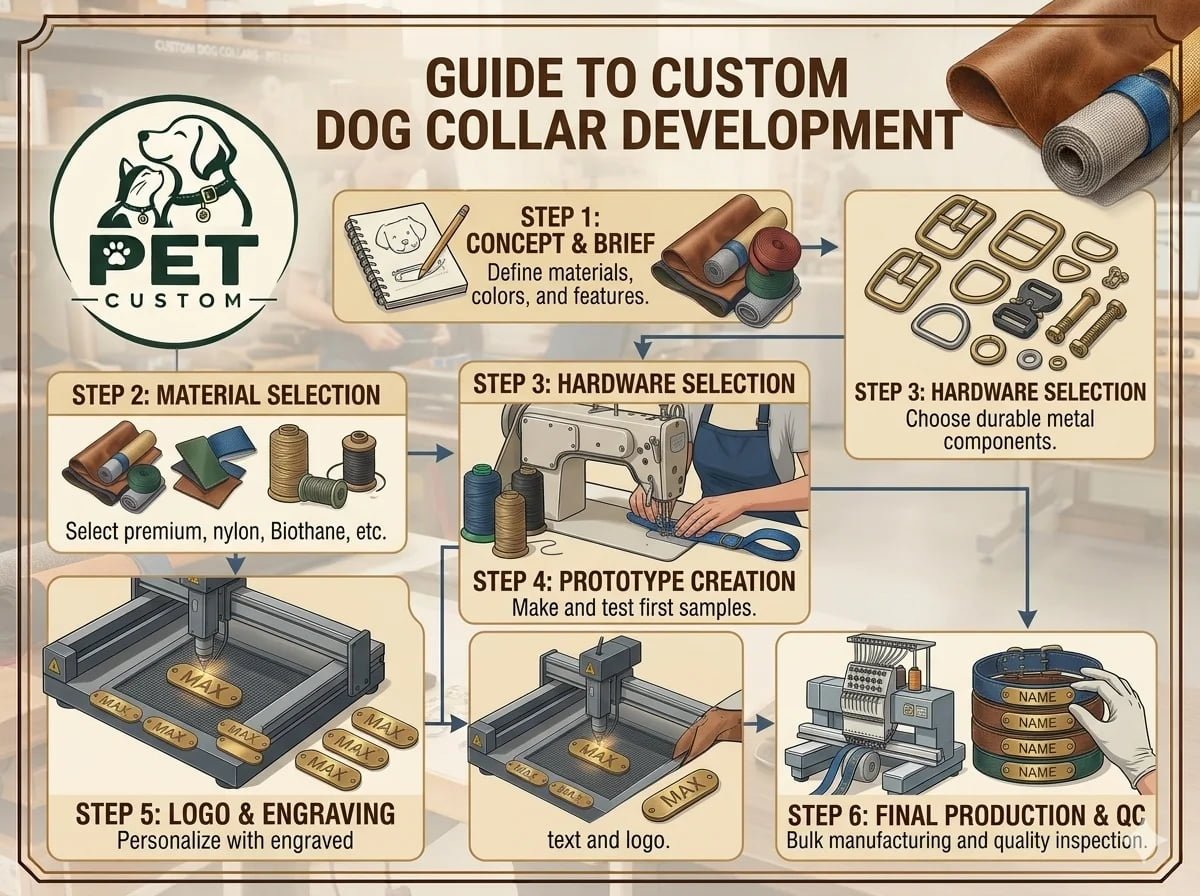
Custom dog collars are becoming an important product category for pet brands, retailers, and wholesalers looking to create a unique identity in the growing pet market. Unlike standard collars, custom dog collars allow businesses to choose materials, colors, hardware, sizes, logos, packaging, and other details based on their brand requirements.
But with so many options available, choosing the right custom dog collar can be challenging. From material selection to manufacturing and minimum order quantities, several factors can affect the quality, cost, and success of your product.
This guide explains the most important things to consider when developing custom dog collars for your pet brand.
1. Choose the Right Material for Your Custom Dog Collars
Material is one of the most important decisions when developing a custom dog collar.
Common materials include nylon, polyester, leather, biothane, cotton, and other synthetic materials. Each material provides a different combination of durability, appearance, comfort, and cost.
For example, nylon is widely used because it is lightweight, durable, and available in many colors. Leather can create a more premium appearance and may be suitable for luxury pet brands. Soft polyester or cotton materials can be a good choice for brands that focus on comfort and lifestyle design.
When selecting a material, consider your target customers, product positioning, expected retail price, and the environment in which the collar will be used.
A premium brand may prioritize appearance and craftsmanship, while an outdoor pet brand may focus more on durability and water resistance.
2. Consider Size and Adjustability
A good custom dog collar needs to fit different dogs comfortably and securely.
Most manufacturers can produce multiple sizes, such as XS, S, M, L, and XL. Adjustable designs are especially useful for brands selling collars to a wide range of customers.
Before starting production, determine the neck-size range of your target dogs. The width of the collar should also be considered because smaller dogs generally require narrower and lighter collars, while larger dogs may need wider and stronger designs.
Providing accurate size specifications to your manufacturer can help reduce production problems and customer returns.
3. Select the Right Custom Logo Method
One of the biggest advantages of custom dog collars is the ability to add your brand identity directly to the product.
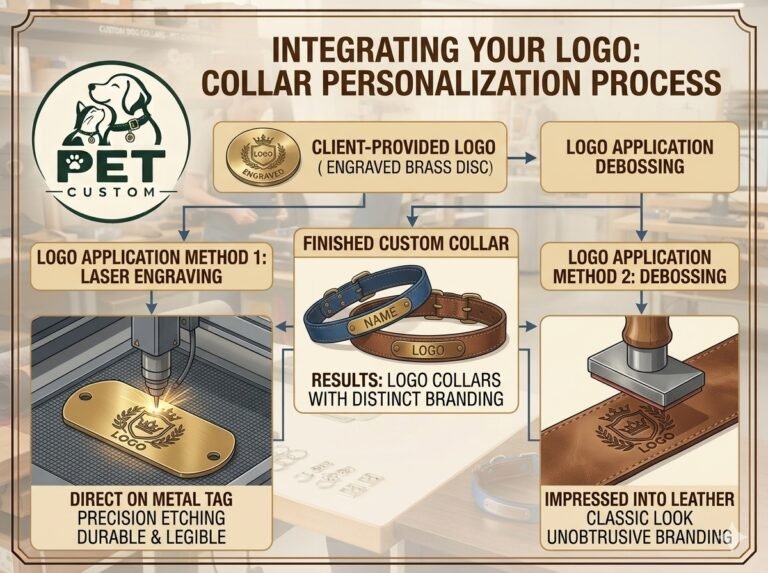
Depending on the material and design, manufacturers may offer several logo options, including woven labels, embroidery, printing, laser engraving, rubber patches, metal logo plates, or embossed logos.
For fabric collars, woven labels and embroidery can provide a strong branded appearance. For leather products, embossing or metal logo plates can create a more premium look.
If you are developing a new product line, ask your manufacturer to recommend the logo technique based on your material, design, order quantity, and target price.
4. Don’t Ignore Hardware Quality
The buckle, D-ring, adjuster, and other hardware components are essential parts of a dog collar.
A collar may look attractive, but poor-quality hardware can negatively affect the customer’s experience and the reputation of your brand.
When sourcing custom dog collars wholesale, ask the manufacturer about the materials used for hardware and the available finishes. Common finishes include black, silver, gold, antique brass, and other customized colors.
For premium products, matching the hardware finish with your brand’s visual identity can make the entire product look more professional.
5. Think About MOQ and Production Cost
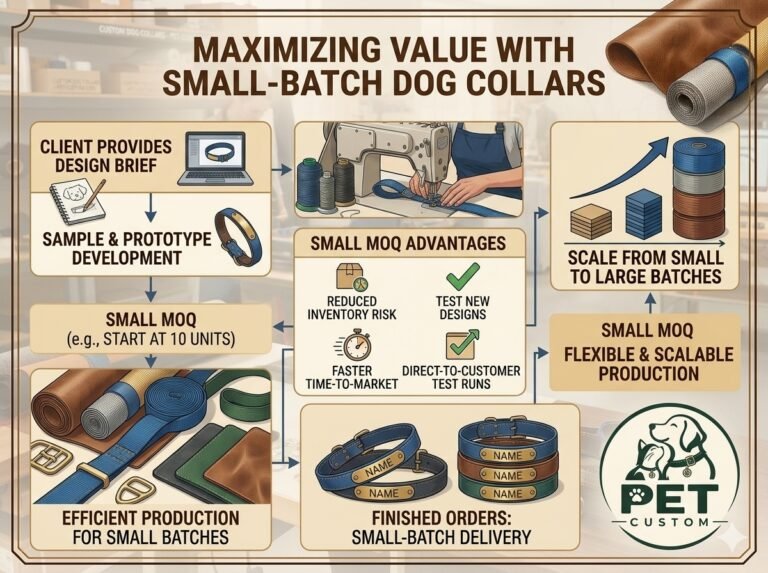
Minimum order quantity, or MOQ, is another important factor when working with a custom dog collar manufacturer.
Some manufacturers may require large quantities for fully customized products, while others can support smaller production runs.
Your MOQ can affect the unit cost, packaging cost, custom hardware cost, and development expenses. If you are launching a new pet brand, starting with a manageable quantity can reduce inventory risk.
However, ordering larger quantities may lower the unit price and make sense once your product has demonstrated market demand.
A good supplier should be able to clearly explain how MOQ affects pricing and customization options.
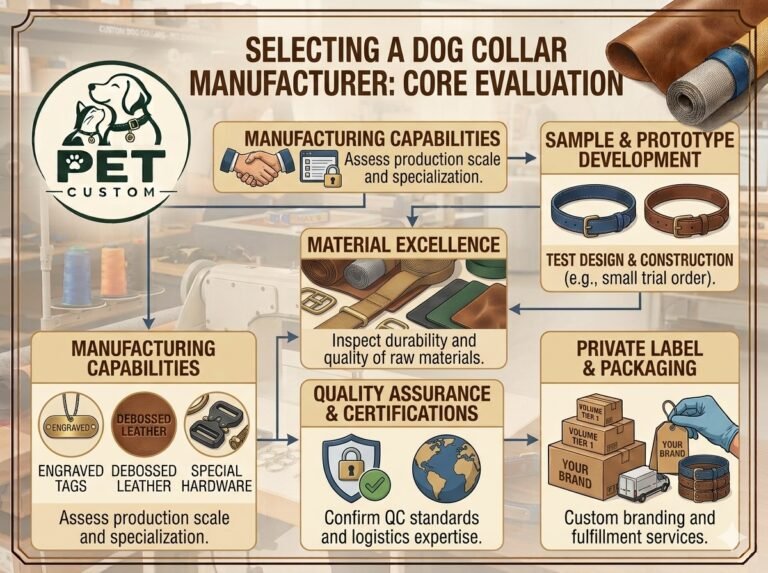
6. Choose a Manufacturer Instead of Only Comparing Prices
Price is important, but it should not be the only factor when choosing a custom dog collar supplier.
A reliable manufacturer should be able to provide consistent quality, clear communication, product samples, customization support, and stable production capacity.
Before placing a large order, consider requesting a sample. Review the stitching, materials, hardware, logo quality, sizing, packaging, and overall construction.
You should also ask whether the manufacturer has experience working with international pet brands and whether they can support OEM, ODM, or private-label production.
The right manufacturing partner can become an important part of your product development process rather than simply being a supplier.
7. Consider Private Label and Packaging
For brands that want to build a recognizable product line, the customization process should go beyond the collar itself.
Private label dog collars can include custom woven labels, branded hangtags, packaging, instruction cards, boxes, and other accessories.
Consistent branding across the product and packaging can create a stronger customer experience and make your products easier to recognize.
If you plan to sell through your own website, Amazon, pet stores, or other retail channels, discuss packaging requirements with your manufacturer before production begins.
8. Ask for a Sample Before Bulk Production
One of the safest ways to evaluate custom dog collars is to order a sample before committing to bulk production.
A sample allows you to check whether the final product matches your expectations.
Pay attention to:
- Material quality
- Stitching
- Collar width
- Buckle strength
- Hardware finish
- Logo placement
- Logo quality
- Adjustability
- Overall appearance
- Packaging
If changes are necessary, communicate them to the manufacturer before mass production.
This process can help prevent expensive mistakes and improve the final product.
What Makes a Good Custom Dog Collar?
The best custom dog collar is not necessarily the cheapest one. It should balance design, comfort, durability, branding, production cost, and customer expectations.
For pet brands, the goal should be to create a product that customers want to use and that clearly represents the brand.
Whether you are developing a premium leather collar, a colorful nylon collection, or a completely new ODM design, choosing the right manufacturing partner can make the development process much easier.
Final Thoughts
Developing custom dog collars involves much more than choosing a color and adding a logo. Businesses need to consider materials, sizing, hardware, branding, MOQ, packaging, quality control, and manufacturing capabilities.
If you are building a pet brand or expanding an existing product line, start by defining your target customer and product positioning. Then work with an experienced custom dog collar manufacturer to develop samples and refine the design before moving into bulk production.
With the right product concept and manufacturing partner, custom dog collars can become a strong addition to your pet product collection while helping your brand create a distinctive position in the market.