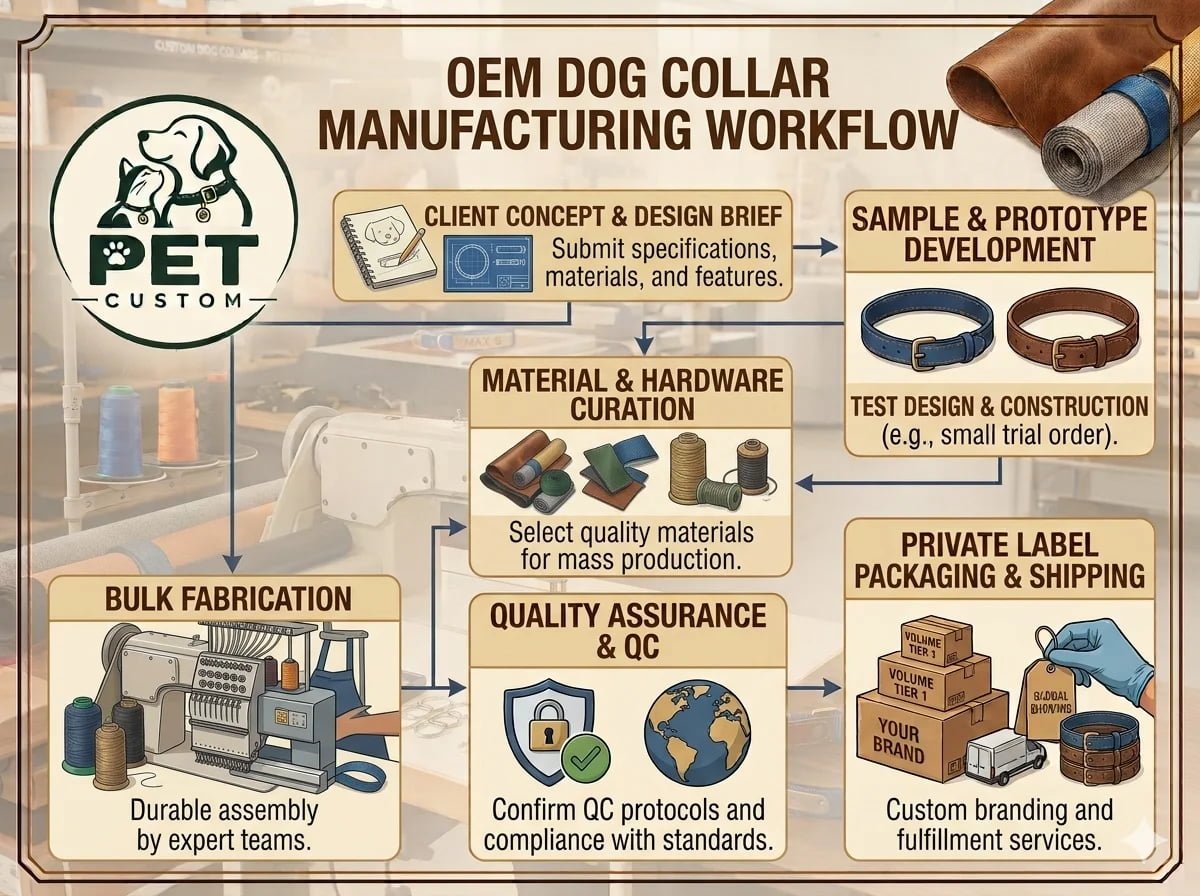
For pet brands that already have their own product concept or design, OEM dog collars can be an effective way to turn that concept into a finished product.
OEM stands for Original Equipment Manufacturing. In an OEM project, the buyer provides the product requirements or design, while the manufacturer handles production according to those specifications.
This approach is particularly suitable for brands that want more control over product design and specifications.
What Does OEM Mean?
In a dog collar OEM project, the brand typically defines important product requirements.
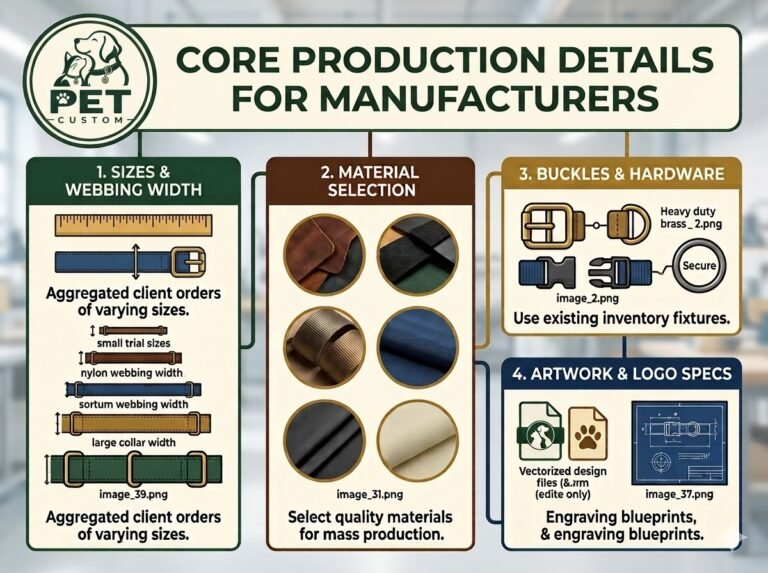
These may include:
- Product design
- Dimensions
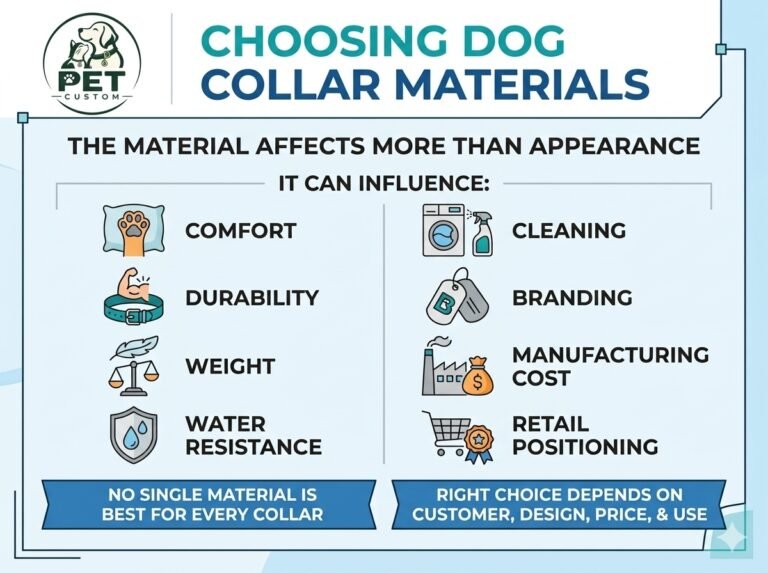
- Materials
- Colors
- Logo
- Hardware
- Construction
- Packaging
The manufacturer then produces the collar according to the agreed specifications.
The exact division of responsibilities depends on the manufacturer and project.
When Should You Choose OEM?
OEM is particularly useful when you already know what you want to manufacture.
For example, you may already have:
- A CAD drawing
- Product specifications
- A physical sample
- A prototype
- A detailed design concept
You can then provide these materials to the manufacturer for evaluation and production.
Can OEM Manufacturers Improve My Design?
Potentially, yes.
Even if you have an existing design, an experienced manufacturer may identify production issues.
For example, they may suggest:
- A stronger stitching method
- A different hardware component
- A more suitable material
- A different logo process
- A more efficient construction method
The manufacturer should not change critical specifications without approval, but technical feedback can help improve manufacturability.
What Information Should You Provide?
A good OEM project starts with a clear specification.
Provide as much information as possible:
Product Dimensions
Include collar width, length, adjustment range, and size specifications.
Materials
Specify the main material and any secondary materials.
Hardware
Identify buckle, D-ring, adjuster, rivets, and other components.
Branding
Provide your logo and specify location, size, and production method.
Color
Provide color references whenever possible.
Packaging
Specify whether you need branded bags, boxes, hangtags, or inserts.
What Happens After You Send the Design?
The manufacturer will typically review the design and determine whether it can be produced.
The process may include:
- Requirement review
- Cost estimation
- Material confirmation
- Sample development
- Sample revision
- Final approval
- Bulk production
- Quality inspection
- Packaging
- Shipment
The exact process varies by manufacturer.
OEM vs. Private Label
OEM and private label are related but not identical.
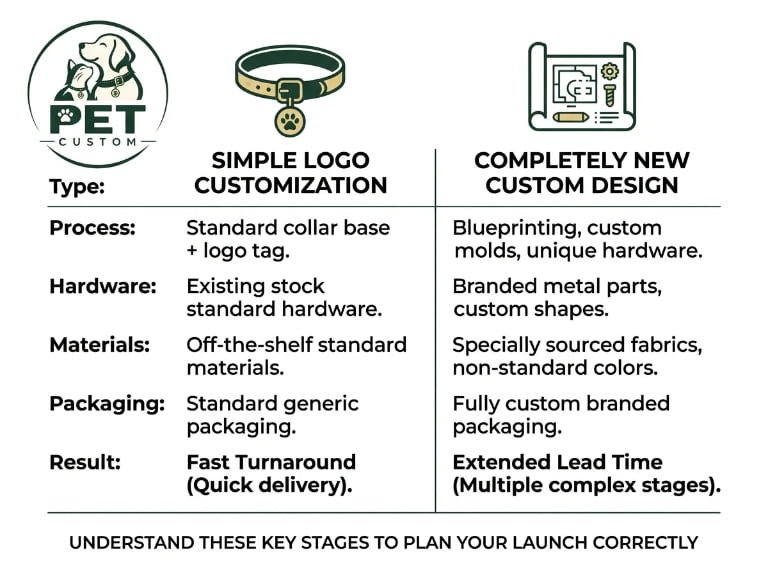
Private label often refers to selling an existing or semi-customized product under your own brand.
OEM generally involves producing a product according to your specifications or design.
If you want to change only the logo and packaging, private label may be sufficient.
If you want a unique collar construction, custom hardware, or proprietary design, OEM manufacturing may be more appropriate.
OEM vs. ODM
OEM means the buyer generally provides the product concept or specifications.
ODM means the manufacturer contributes more to product design and development.
For example:
OEM: “Here is our collar design. Please manufacture it.”
ODM: “We want a premium reflective dog collar. Can you help us develop the product?”
Understanding this difference can help you choose the right manufacturing partner.
Frequently Asked Questions
What is an OEM dog collar?
An OEM dog collar is produced by a manufacturer according to a brand’s specific product requirements or design.
Do I need a finished design for OEM manufacturing?
Not necessarily. However, the more detailed your specifications are, the easier it is for the manufacturer to evaluate and quote the project.
Can I provide my own sample?
Yes. A physical sample can be useful for communicating dimensions, materials, construction, and appearance.
Can OEM manufacturers make custom hardware?
Some manufacturers can support custom hardware development, although tooling, MOQ, and development costs may apply.
Is OEM more expensive than standard products?
Usually, deeper customization can increase development and production costs, particularly when custom materials or hardware are required.
Final Thoughts
OEM dog collars are a strong option for pet brands that want control over product design and specifications.
The key to a successful OEM project is clear communication.
Provide accurate specifications, review the manufacturer’s technical feedback, develop a physical sample, and confirm every important detail before mass production.
With the right manufacturing partner, OEM production can help transform a unique dog collar concept into a scalable branded product.