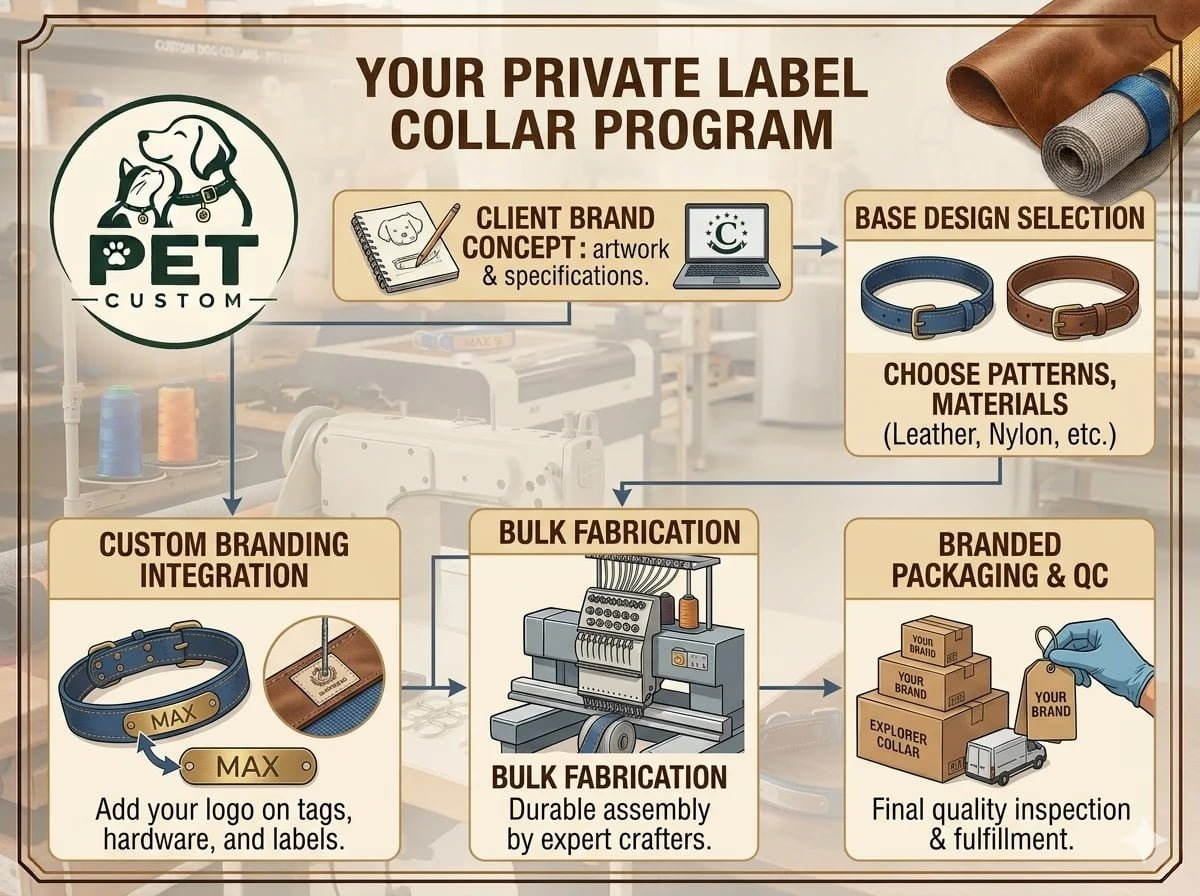
Launching a pet product brand does not always require building a manufacturing facility from scratch. With private label dog collars, businesses can work with an experienced manufacturer to create products under their own brand name.
Private label manufacturing allows businesses to customize product details, branding, packaging, and other elements while relying on a professional manufacturer for production.
For entrepreneurs and growing pet brands, this can be a practical way to enter the market and develop a unique product line.
What Are Private Label Dog Collars?
Private label dog collars are dog collars manufactured by a third-party supplier and sold under another company’s brand.
Depending on the manufacturer, businesses may be able to customize:
- Brand logo
- Product colors
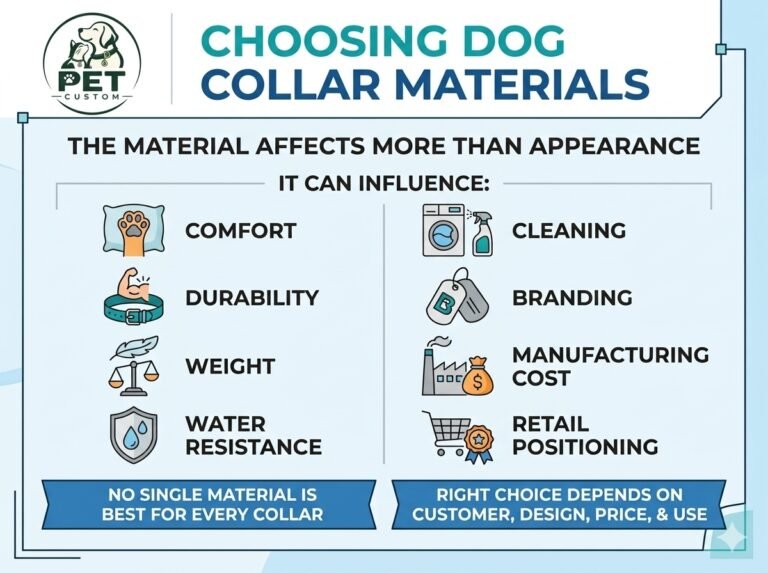
- Materials
- Collar sizes
- Hardware
- Labels
- Packaging
- Product designs
The level of customization depends on the supplier and production requirements.
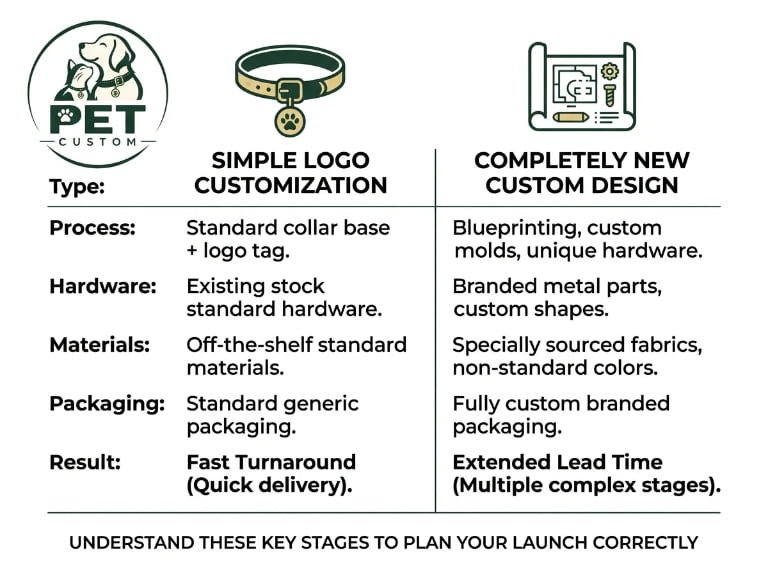
Some private label programs offer simple branding, while more advanced manufacturers can develop completely customized products.
Private Label vs. Custom Dog Collars
These two terms are closely related but have slightly different meanings.
Custom dog collars usually emphasize the customization of the physical product.
Private label dog collars emphasize the branding and ownership of the product line.
For example, a business may purchase an existing collar design and add its own logo. This can be considered a relatively simple private label product.
Another brand may develop a completely new collar with custom materials, colors, hardware, packaging, and branding. This involves a much deeper level of customization.
Why Choose Private Label Dog Collars?
One of the biggest benefits is the ability to build a recognizable brand without manufacturing everything yourself.
Instead of competing with generic products, your business can create its own product identity.
Private label products can also help businesses control the customer experience.
Your logo, packaging, product colors, labels, and product presentation can all follow the same brand guidelines.
This is particularly important for premium pet brands where design and presentation are major parts of the customer experience.
How Does Private Label Manufacturing Work?
The process usually begins with product planning.
Step 1: Define Your Product
Determine the target customer, product positioning, material, color, size, and approximate retail price.
Step 2: Find a Manufacturer
Look for a manufacturer with experience producing dog collars and supporting private label projects.
Step 3: Discuss Customization
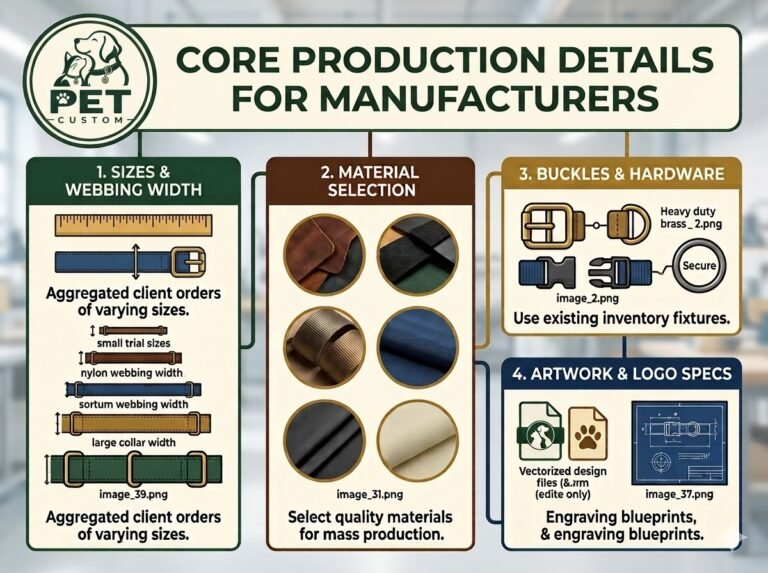
Provide your logo, design references, specifications, colors, packaging requirements, and other details.
Step 4: Develop a Sample
The manufacturer creates a sample for evaluation.
Step 5: Make Adjustments
Review the sample and request changes if necessary.
Step 6: Approve Production
Once the sample meets your requirements, approve the specifications and begin bulk production.
Step 7: Quality Control and Delivery
The manufacturer completes production, performs quality checks, prepares packaging, and arranges shipment.
What Should You Customize?
Not every part of the product needs to be completely redesigned.
For a new brand, you might start with:
- Custom brand colors
- Logo
- Woven label
- Hardware finish
- Packaging
- Product size range
More established brands may choose custom materials, unique hardware, special construction, and completely original designs.
The appropriate level of customization depends on your budget, positioning, and target customers.
How Important Is Packaging?
Packaging is often overlooked when developing private label dog collars.
However, packaging can significantly influence how customers perceive your brand.
A premium collar inside a well-designed package can create a very different experience from the same collar placed inside a generic plastic bag.
Custom packaging may include boxes, hangtags, labels, bags, instruction cards, and other branded elements.
The packaging should match the product and overall brand identity.
How to Choose a Private Label Supplier
When evaluating suppliers, look for more than product photos.
A good private label supplier should be able to explain:
- Available materials
- Customization options
- MOQ
- Sample process
- Production lead time
- Logo methods
- Packaging options
- Quality control
- Shipping process
You should also evaluate how clearly the supplier communicates.
Good communication is particularly important when developing a new product because small misunderstandings about measurements, colors, materials, or logos can create expensive production problems.
Start Small and Develop Over Time
For a new pet brand, it may not be necessary to launch a large collection immediately.
Starting with a small number of carefully designed products can help you understand customer demand before investing in larger inventory.
Once a product performs well, you can expand the collection with additional colors, sizes, matching leashes, harnesses, or other accessories.
This approach can reduce inventory risk while allowing the brand to develop gradually.
Conclusion
Private label dog collars provide an opportunity for entrepreneurs, retailers, and pet brands to build their own product lines without operating their own manufacturing facilities.
The process can range from simple logo customization to fully customized product development.
The most important factors are choosing the right product concept, finding a capable manufacturer, developing accurate samples, maintaining quality, and creating consistent branding across the product and packaging.
With the right manufacturing partner, a simple dog collar can become a distinctive branded product that helps your pet business stand out in a competitive market.